

Three is the age when the car seat advice starts to get confusing. Friends are moving their children into boosters, grandparents remember a time when nobody used car seats at all, and your little one may be asking why they can't sit "like a big kid". This guide cuts through the noise with the facts, so you can make a confident choice for your three-year-old.
Five myths about car seats at three
Myth: "Three is old enough for a booster."
Fact: Age alone never decides when a child is ready for a booster. A three-year-old is almost always safer in a seat with its own harness. High back boosters use the adult seat belt, which relies on a child sitting still and upright for the whole journey, something very few three-year-olds can manage, especially when they fall asleep.
Myth: "Their legs are too long to rear face."
Fact: Children sit cross-legged, frog-legged or with their feet up on the vehicle seat quite happily. Leg room is about comfort, not safety, and an extended rear-facing seat is designed with this in mind.
Myth: "Rear-facing seats are only for babies."
Fact: Extended rear-facing seats are built for toddlers and young children. Many keep children rear facing to the maximum limits of the seat, which can be up to six or seven years old depending on the size of the child.
Myth: "Forward facing is fine once they're past 15 months."
Fact: 15 months is the legal minimum for rear facing under i-Size (R129), not a recommendation to turn around. A three-year-old's neck and spine are still developing, and rear facing gives them far better protection in a frontal crash.
Myth: "Any seat is fine for short journeys."
Fact: Most crashes happen close to home, on familiar roads. Every journey deserves the right seat, correctly fitted.
Harness or seat belt: what's the difference?
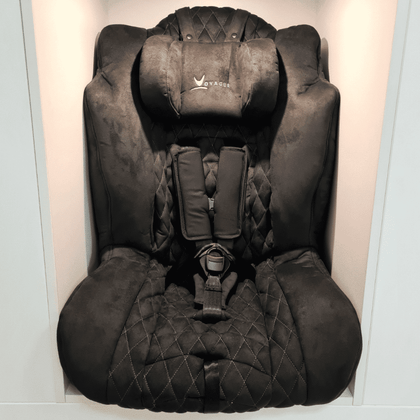
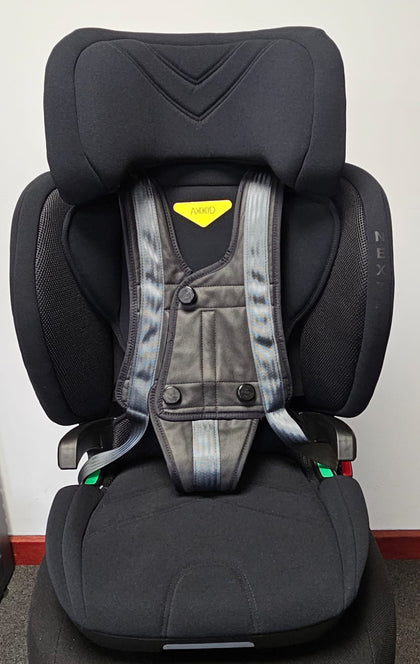
A harnessed seat holds your child with its own five-point harness. The seat takes the crash forces, and the harness keeps your child in position even if they slump, wriggle or doze off.
A high back booster raises your child so that the car's own adult seat belt sits in the right place across their shoulder and hips. It only works well if the child stays sitting properly for the entire journey.
For three-year-olds, we strongly recommend a harnessed seat, and ideally one that is still rear facing.
Is your three-year-old's current seat still right?
Try this quick check next time you strap them in:
- Head position. Is their head below the top of the seat shell, or within the headrest's range?
- Harness height. For rear facing, the shoulder straps should come from at or just below the shoulders. For forward facing, at or just above.
- Harness tightness. Can you pinch any slack at the collarbone? If so, tighten it.
- Seat limits. Check the label for the maximum height and weight, and see how close your child is.
- Fitting. Give the seat a firm shake at the belt path or ISOFIX point. It shouldn't move more than an inch or so.
If you answer "no" or "not sure" to any of these, it's worth having the seat checked.
Real-life situations
Grandparents and childminders. If someone else drives your child regularly, they need a properly fitted seat too. ISOFIX seats with clear indicators make it much harder to get the fitting wrong, and it's worth showing them how the harness should feel.
A second car or a car swap. Not every seat fits every vehicle. If you're moving a seat between cars, check it fits both before you buy, and remember that a support leg needs a suitable floor beneath it.
A new baby on the way. Many families with a three-year-old are planning for a second child. Think about whether two seats, or three, will fit side by side, and which seat positions have ISOFIX.
Long journeys and holidays. A comfortable recline and good head support make a huge difference when your child falls asleep. If you're flying, check with your airline before relying on a seat for the flight.
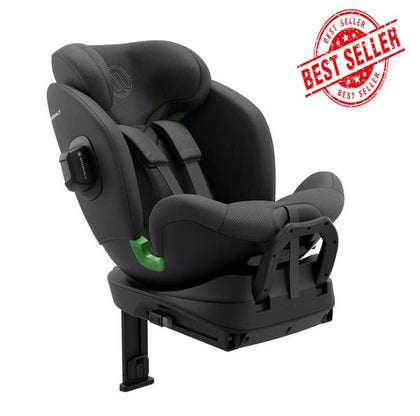
What to look for in a seat for a three-year-old
- A five-point harness
- Rear facing to a high limit, ideally 105cm and well beyond
- i-Size (R129) approval, and Swedish Plus Tested if possible
- A confirmed fit in your car
- Easy-to-use adjustments, so the harness grows with your child
Shop car seats for 3 year olds
Our car seats for 3 year olds collection brings together the seats our team recommends for this age, including extended rear-facing and Swedish Plus Tested options.
Every seat bought from In Car Safety Centre comes with a free one-hour fitting in our Towcester or Rayleigh store, and we can check seats bought elsewhere for £25. With 40 years' experience and a fully trained team, we'll make sure the seat suits your child and your car. Book a free appointment or email info@incarsafetycentre.co.uk.
Quick answers
What does UK law say?
Children must use a suitable child car seat until they are 12 years old or 135cm tall, whichever comes first.
When can my child use a backless booster cushion?
Newly approved backless booster cushions are only for children over 125cm and 22kg, so they are not suitable for a three-year-old.
My child hates their car seat. What can I do?
Check the harness isn't twisted or too tight around the hips, try a different recline, and keep a few car-only toys or songs. A comfortable child is a calmer passenger.











Comments (0)
There are no comments for this article. Be the first one to leave a message!